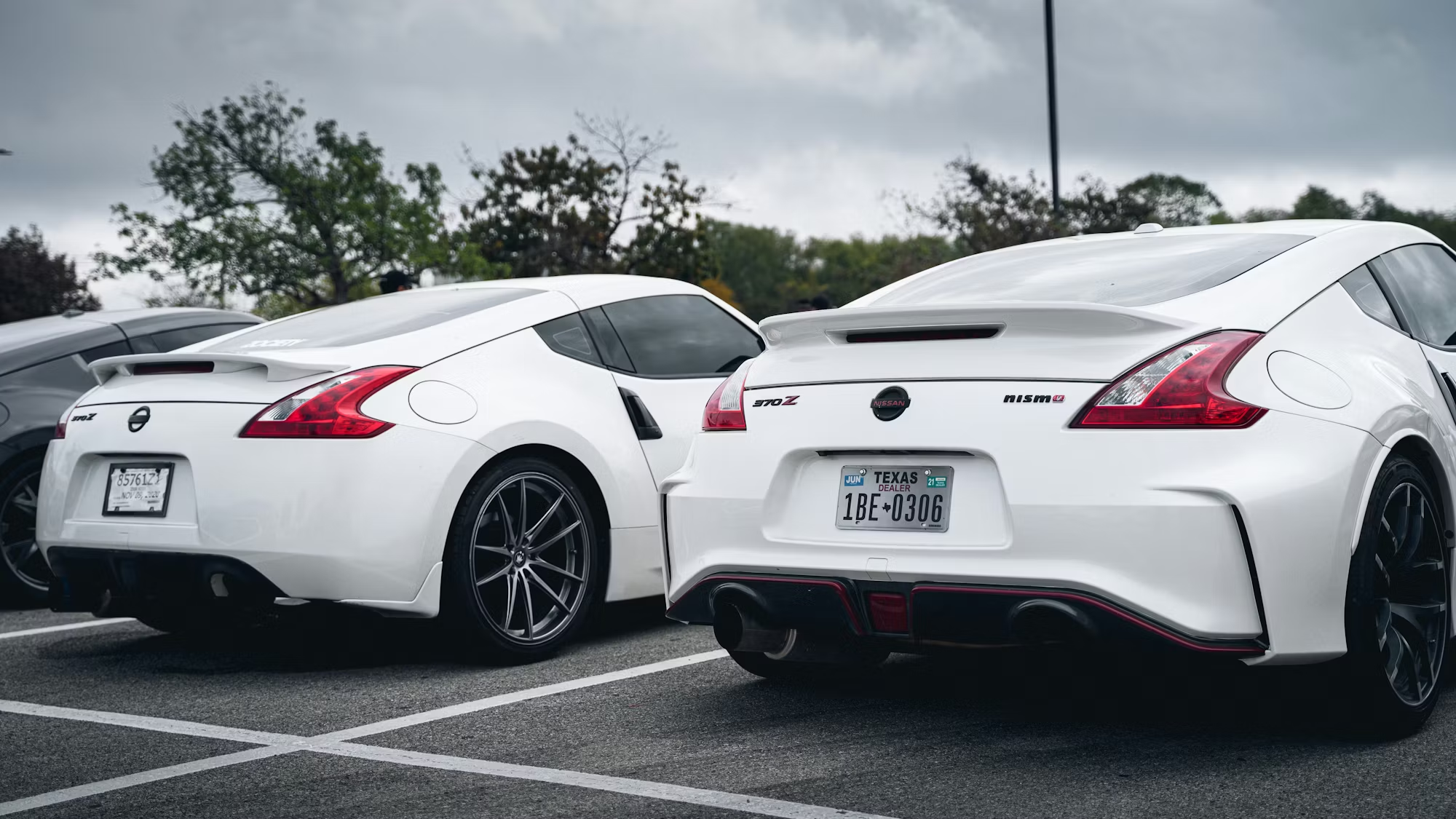
Supercars have always captured the imagination of automotive enthusiasts, embodying the pinnacle of performance, luxury, and cutting-edge technology. These vehicles are not merely machines; they represent a fusion of art and engineering, with each model telling a unique story of innovation and ambition. This article pays tribute to some of the most iconic supercars that have shaped the industry, celebrating their legacy and examining the lasting impact they have had on automotive culture.
One cannot discuss supercar legends without mentioning the Ferrari brand. Founded in 1939, Ferrari has become synonymous with high performance and luxury. The Ferrari 250 GTO, produced between 1962 and 1964, is one of the most coveted models in the world, not just for its racing pedigree but also for its stunning design. With only 39 units ever built, its value has skyrocketed, fetching upwards of $40 million at auctions. The 250 GTO’s success in motorsport, combined with its elegant lines, has cemented its place in automotive history. This model set the tone for Ferrari’s future, focusing on performance and exclusivity, traits that continue to define the brand today.
Transitioning into the modern era, the Ferrari F40, released in 1987, marked a significant milestone for the brand. Designed to celebrate Ferrari’s 40th anniversary, the F40 was the last model to be approved by Enzo Ferrari himself. It was revolutionary for its time, boasting a lightweight construction, a powerful twin-turbocharged V8 engine, and a top speed of 201 mph. The F40’s raw, unfiltered driving experience and striking appearance made it an instant classic, influencing future generations of supercars. Today, it remains a benchmark for performance and an icon of automotive design.
Equally iconic in the world of supercars is Lamborghini. The Lamborghini Miura, introduced in 1966, is often credited with creating the supercar segment. With its mid-engine layout and stunning design by Marcello Gandini, the Miura broke away from traditional sports car norms and set new standards for performance. It was powered by a V12 engine and could reach a top speed of 170 mph, making it the fastest production car of its time. The Miura’s design and engineering innovations have inspired countless models since, solidifying its place as a legend in automotive history.
The Lamborghini Countach, unveiled in the 1970s, further pushed the boundaries of design with its sharp angles and bold aesthetics. Its scissor doors became an iconic feature, symbolizing the adventurous spirit of the brand. The Countach’s performance was equally impressive, boasting a powerful V12 engine that provided exhilarating speed. This model not only became a pop culture icon but also helped establish Lamborghini as a leader in the supercar market.
As we delve deeper into the supercar landscape, Porsche emerges as another key player. The Porsche 911 Turbo, first introduced in 1975, has evolved through decades while maintaining its core characteristics. Known for its distinctive design and rear-engine layout, the 911 Turbo has become one of the most recognizable sports cars in the world. Each generation has brought advancements in technology and performance, culminating in models like the Porsche 911 Turbo S, which features cutting-edge engineering and a top speed exceeding 200 mph. The 911’s blend of everyday usability and track-ready performance makes it a unique icon in the supercar realm.
McLaren, a brand synonymous with innovation, has made significant contributions to the supercar genre. The McLaren F1, launched in 1992, set new standards for performance and exclusivity. With a BMW-sourced V12 engine and a lightweight carbon fiber chassis, the F1 achieved a top speed of 240 mph, making it the fastest production car at the time. Its three-seat layout and driver-focused design provided a unique driving experience that emphasized performance without sacrificing comfort. The McLaren F1’s legacy continues to influence modern supercars, highlighting the importance of innovation and engineering excellence.
In recent years, Bugatti has become a household name in the hypercar segment, with models like the Bugatti Veyron and Chiron pushing the limits of what is possible. The Veyron, released in 2005, was revolutionary for its time, featuring a quad-turbocharged W16 engine capable of producing 1,001 horsepower and achieving a top speed of 253 mph. Bugatti’s commitment to performance and luxury has redefined expectations for hypercars, and the Chiron has taken this legacy further, boasting an astonishing 1,479 horsepower and a top speed of 304 mph. Bugatti’s engineering marvels showcase the ultimate expression of speed and luxury, making them legends in their own right.
As we look to the future, the supercar landscape is evolving with the introduction of hybrid and electric technologies. The McLaren P1 and Ferrari SF90 Stradale are excellent examples of how manufacturers are embracing sustainability while still delivering blistering performance. These hybrid supercars combine traditional internal combustion engines with electric power, offering the best of both worlds: incredible speed and improved fuel efficiency. This shift is indicative of a broader trend within the industry, where performance and environmental consciousness are no longer mutually exclusive.
Moreover, the rise of electric supercars is reshaping perceptions of what high-performance vehicles can achieve. The Rimac Nevera, an all-electric hypercar, showcases how electric power can rival traditional engines. With an output of 1,914 horsepower and a 0 to 60 mph time of just 1.85 seconds, the Nevera is redefining the boundaries of speed and acceleration. As battery technology advances, we can expect electric supercars to become more prevalent, pushing the limits of performance while reducing their environmental footprint.
In conclusion, the legends of supercars are defined by their performance, design, and the lasting impact they have made on the automotive industry. From the classic Ferrari 250 GTO and Lamborghini Miura to modern marvels like the Bugatti Chiron and electric powerhouses like the Rimac Nevera, each model tells a story of ambition, innovation, and passion. As the supercar landscape continues to evolve, these iconic vehicles remind us of the artistry and engineering that define the ultimate driving experience. The legacy of these supercars will undoubtedly inspire future generations, ensuring that their spirit lives on in the hearts of automotive enthusiasts worldwide.